|
| Osprey |
Today, December 26, 2011, kayaked the Wekiva River from
Katie’s Landings. It was a solo and this time made a little adjustment to my
routine when I kayak here. Started exploring the area across Katie’s as usual.
Even went downstream for an hour but in front of Wekiva Haven decided to turn
around and go upstream. The river was clear and not too fast. The wind was
coming from the North and it was negating the river flow. Actually, the wind
was pushing me South.
 |
| Anhinga(male) |
Put In / Take Out:
Katie’s Landings. Check the
link to our first post about on this part of the
Wekiva River for information.
 |
| Cormorant |
Today started the paddle exploring the area across Katie’s
Landings. As a rule of thumb you will see a lot of wildlife in this small part
of the river. Today was not different from other paddles here. I was
entertained for about 30 minutes, when realized how much time spend there, so
continued my downstream paddle. Here are some pics of what I saw on those 30
minutes in front of Katie’s Landings.
 |
| Belted Kingfisher |
 |
| Eastern Phoebe |
 |
| Great Egret..bon appetit |
 |
| Little Blue Heron |
 |
| Mallards |
 |
| Pileated Woodpecker |
 |
| Robin |
On my way to Katie’s was thinking
about changing the routine today and paddle to the South. But when arrived at
the put in, a large group of kayakers were going that direction so decided to
stick to the known routine and paddle to the North. Did just that but when
reached the zone where Wekiva Haven is turned around. Two reasons for that:
First, my pass to Seminole State Forest is good until December the 31st
so this week I am going to kayak this portion of the river again. Second, I do
not have the chance to explore South of Katie’s too often. It is open and my
wife does not like to paddle when it is like that. With that being said,
decided to do something different anyways. The kayakers I saw at Katie’s were,
most likely, gone by now. On my way upstream made a stop at Katie’s left the
camera bad in the mini van and then continued my paddle.
 |
| Sandhill Crane |
 |
| Red Shouldered Hawk |
It was a good decision. Had lots
of pics chances. While having a sip of water spotted a large bird with a white
head. A Bald Eagle!!! We have seen eagles in this general area of the Wekiva
River before but it was a pleasant surprise. The raptor was pic friendly and
did not fly away while I had a field day shooting pics. By the way, did shoot
316 pics total today. After my wife checked them less than a hundred made the
cut. That tells you why I do not like to paddle without her. Back to the paddle,
the sun did hide after I cross the SR46 Bridge over the river. I was thinking
about reaching Wekiva Falls, a popular camping place, and turn around. But
after arriving at the entrance of Wekiva Falls did paddle upstream another 15
minutes and then turned around. By that time the Sun made a comeback and do did
the wind. I had to work my way downstream because the wind was pushing me back.
 |
| Bald Eagle |
 |
| Osprey |
Did You Know That?
The osprey is the only raptor whose
outer toe is reversible, allowing it to grasp its prey with two toes in front,
and two behind. The Osprey is sometimes known as the sea hawk and it has a
wingspan of 6 feet. When migrating ospreys will cover an average of 175 miles a
day, but it can be a maximum of 269 miles. The ospreys are found in all
continents except Antarctica. The osprey diet consists almost exclusively of
fish. Ospreys mate for life and normally, reach sexual maturity and begin
breeding when they are three to four years of age, though in some regions with
high Osprey densities, they may not start breeding until five to seven years
old, and there may be a shortage of suitable tall structures. If there are no nesting
sites available, young Ospreys may be forced to delay breeding. Ospreys are supreme fishers. The plunge feet first into the water to pluck live fish from the water's surface, often completely submerging themselves in the process. This skillful maneuver is aided by a few key adaptation, including oily plumage and the reversible toe we mentioned earlier. When an Osprey carries a fish to the nest, it carries it headfirst to make it as aerodynamic as possible.
 |
| Osprey |
Here are more pics of what I saw
today at the Wekiva River…
 |
| Tri Colored Heron |
 |
| Give me huuuuug (Anhinga and Little Blue Heron) |
 |
| Bald Eagle |
 |
| Bald Eagle |
 |
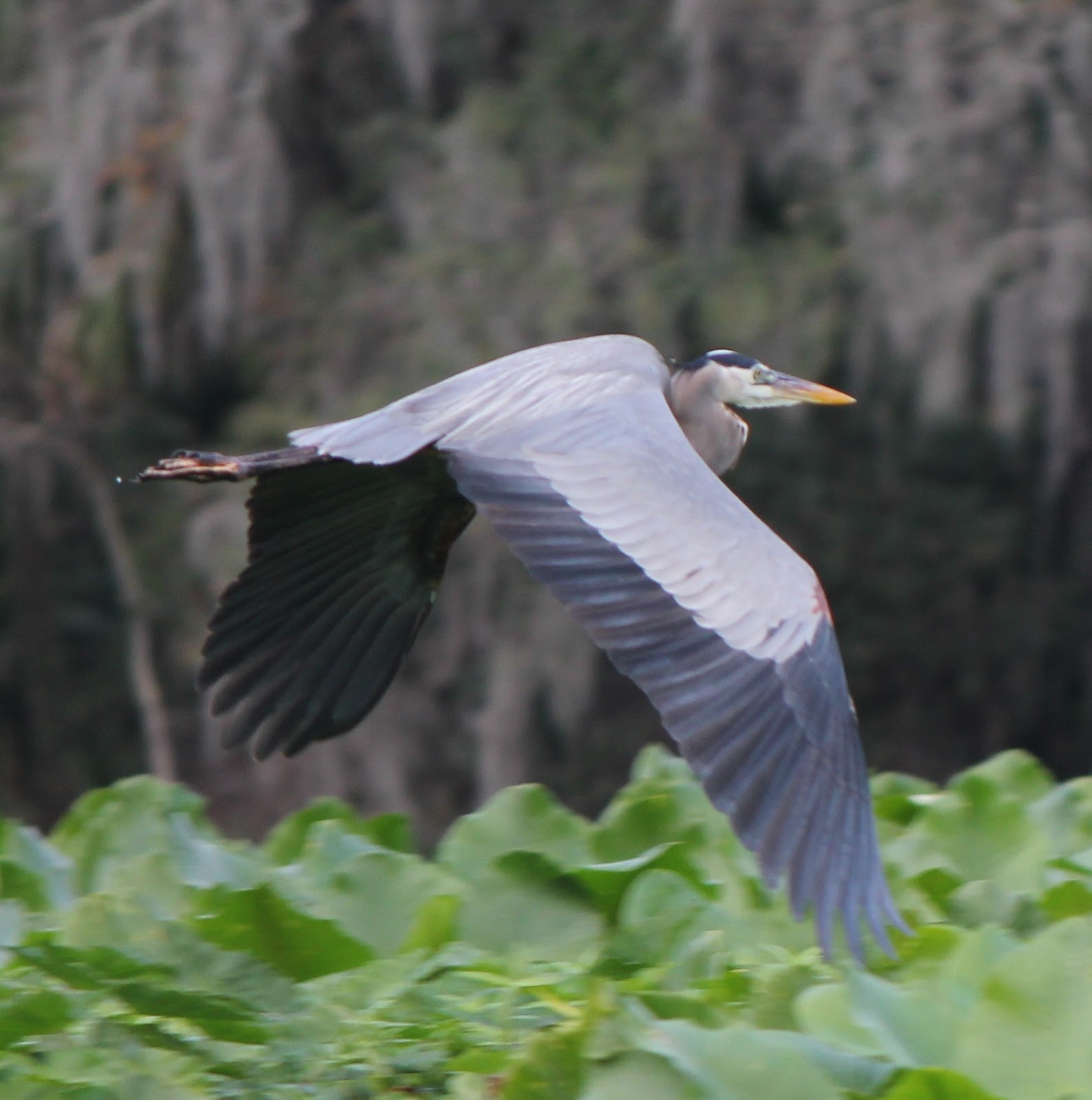
| Great Blue Heron (breeding plumage) |
 |
| Great Blue Herons nesting |
 |
| Great Blue Heron |
 |
| Great Egret |
 |
| Limpkin |
 |
| Little Blue Heron |
 |
| Juvenile Little Blue Heron |
 |
| Little Blue Heron |
 |
| Mallard |
 |
| Moorhen |
 |
| Moorhen |
 |
| Pie Billed Grebe |
 |
| Pileated Woodpecker |
 |
| Pileated Woodpecker |
 |
| Red Bellied Woodpecker |
 |
| Red Bellied Woodpecker |
 |
| Red Shouldered Hawk |
 |
| Red Shouldered Hawk |
 |
| Sandhill Crane family |
 |
| Turkey |
 |
| Turtles |
 |
| SR46 Bridge over the Wekiva River (South side) |
 |
| Wekiva River view (South) |
 |
| Wekiva Falls area |
Well, and this is it for this one. Here a link for the Photobucket album
Wekiva River. Check it out for more pics from this and past trips.
Thanks for reading and see you in the next Views From Our Kayak.
 |
| Wekiva River |